
A number of our house plants outgrew their pots and needed repotting into larger pots so they had more room to grow. For the palm, the pot was now quite large, so I decided to make an oak plant pot stand to lift it up off the floor.
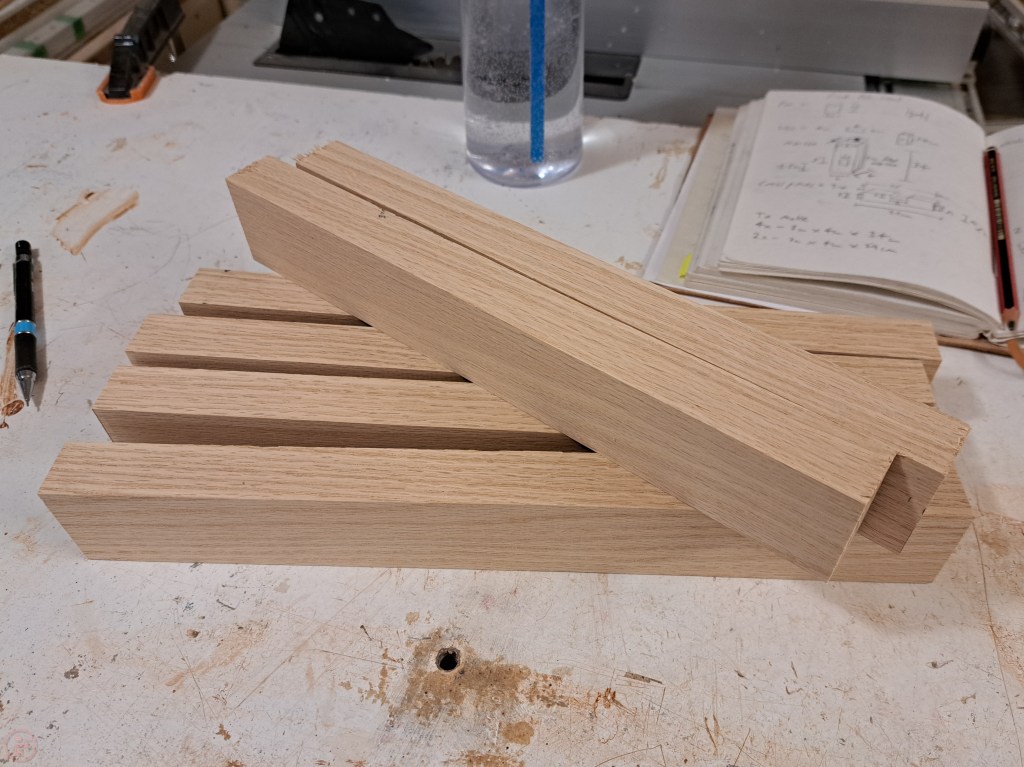
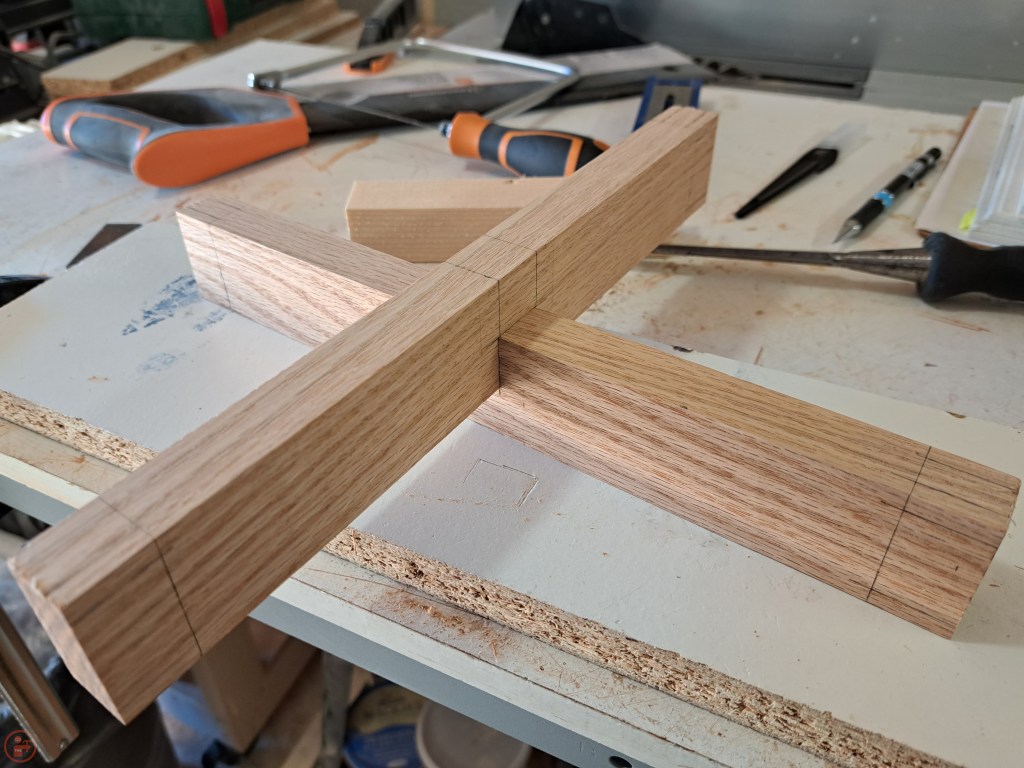
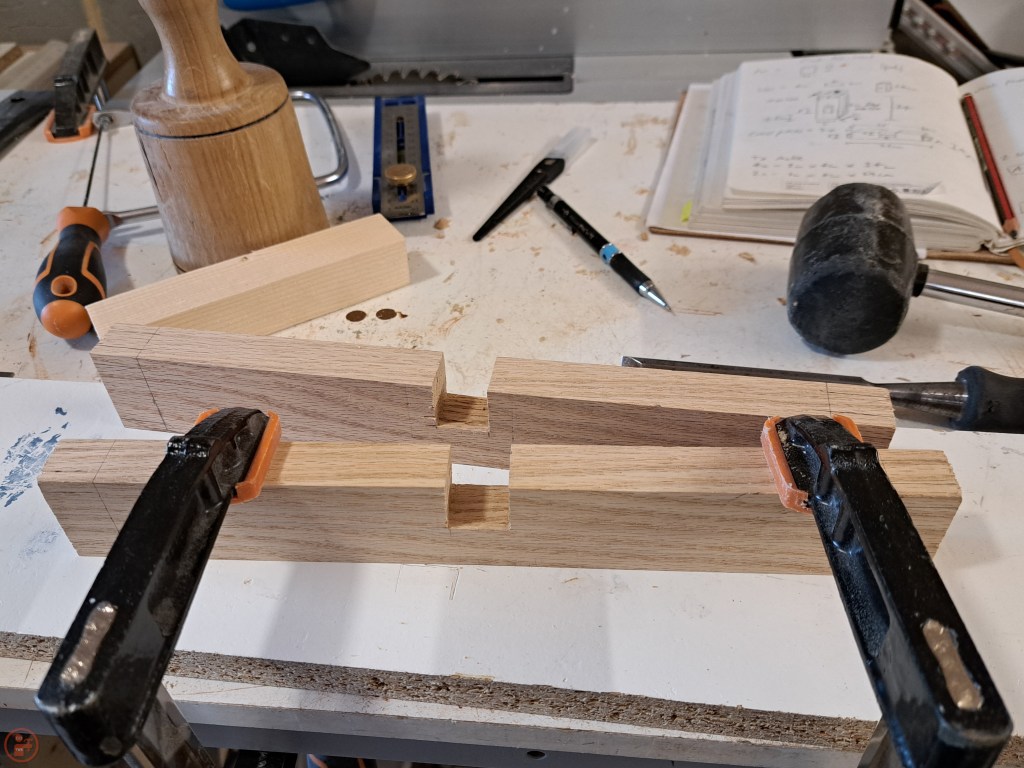
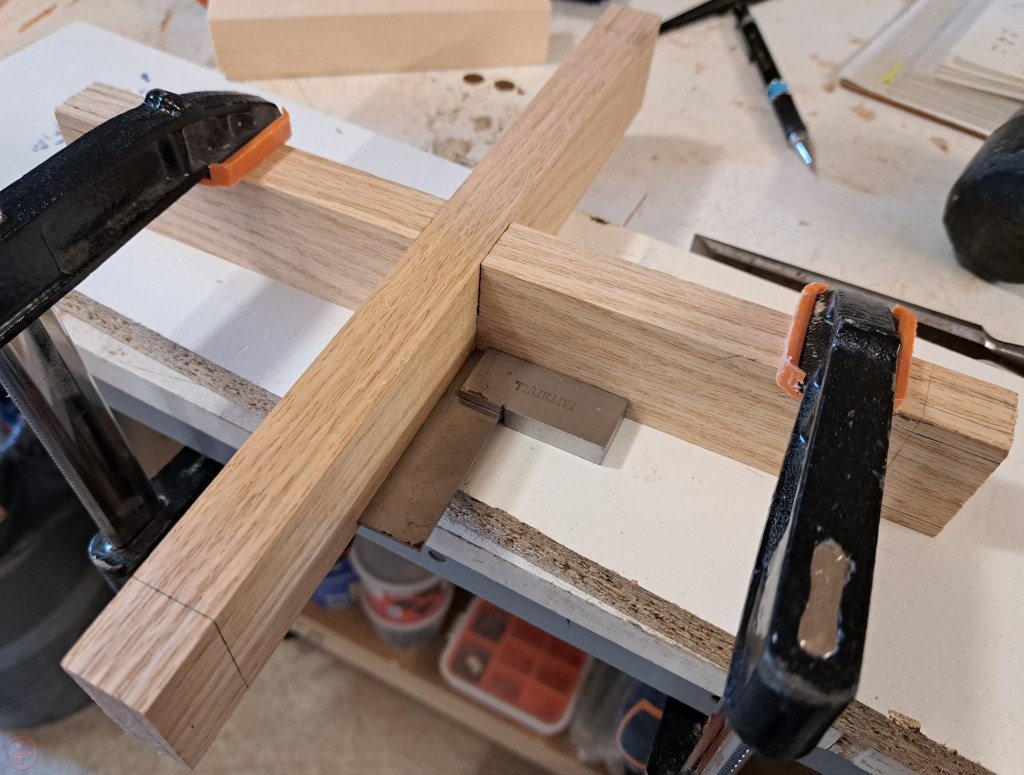
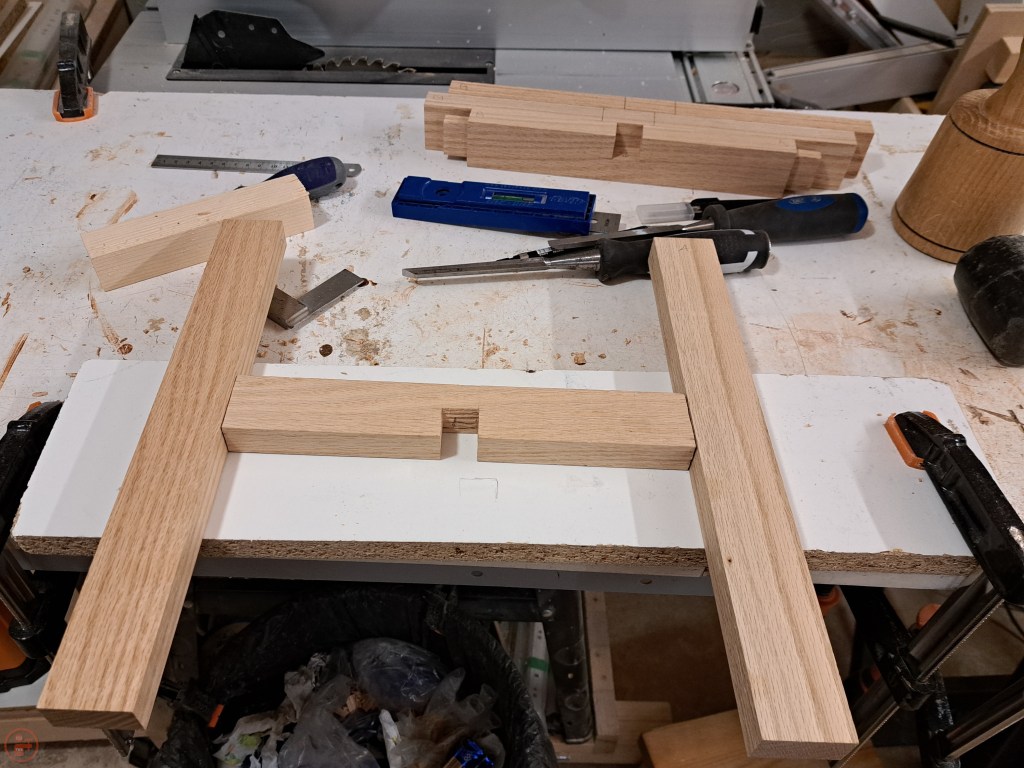
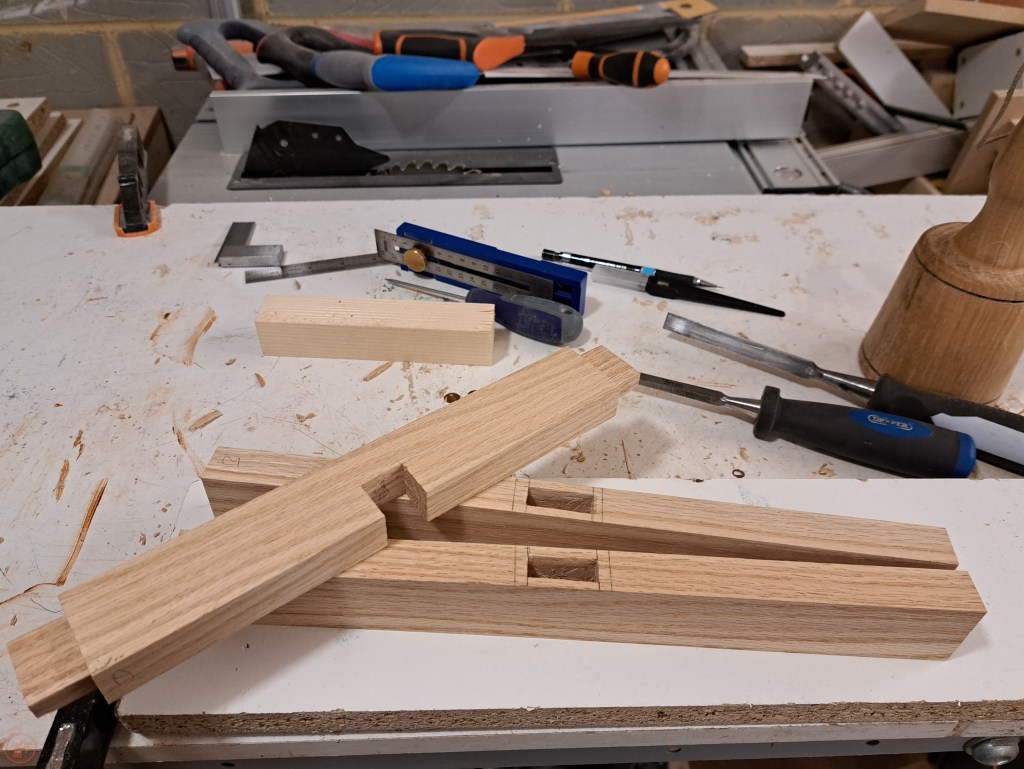
I decided to make the plant pot stand out of oak, as it would be nice and sturdy and I love the colour and grain. After cutting the pieces to the correct dimensions, I decided to do all the rest of the project using only hand tools as a little challenge to myself. I cut out the centre section of the cross pieces, where the pieces intersect, and used a chisel to remove any remaining waste material. To ensure a strong joint between the centre pieces and the legs, I decided to use mortice and tenon joinery. I also haven’t done much joinery using hard wood, so this was good practice to learn how the wood behaves! After marking the edges of the joint with a marking knife, I took my time to remove the material using a hand saw and then used my chisels to end up with a nice square tenon. I repeated this for the tenon on the other end of the centre piece, as well as for both ends of the other piece.
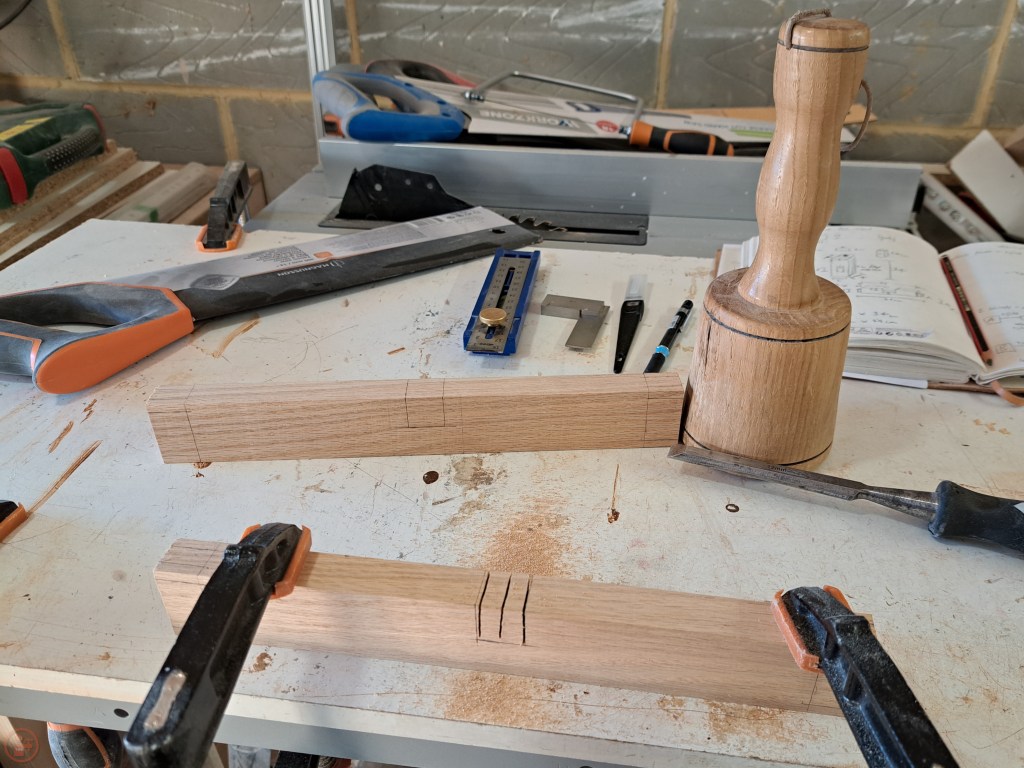
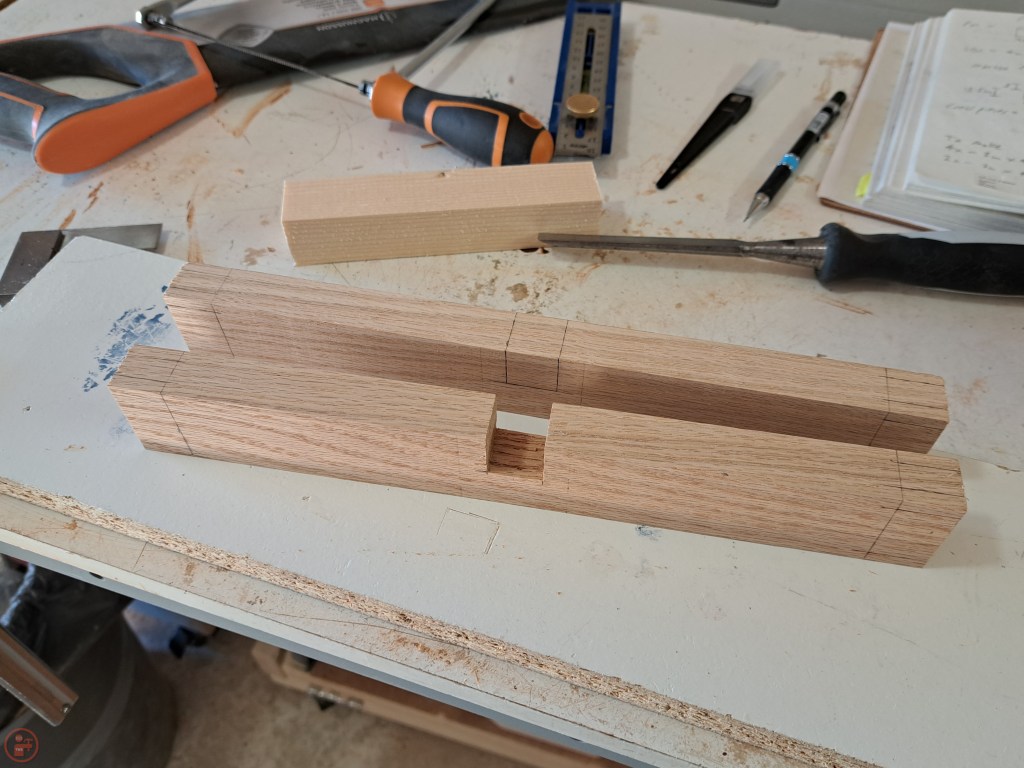
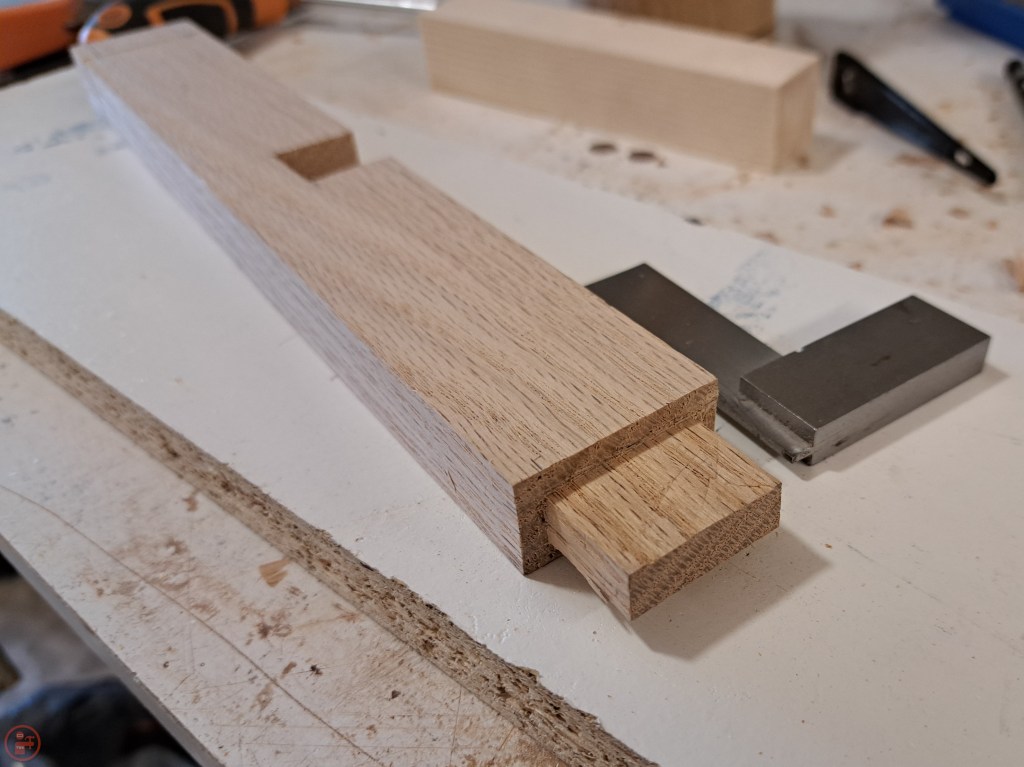
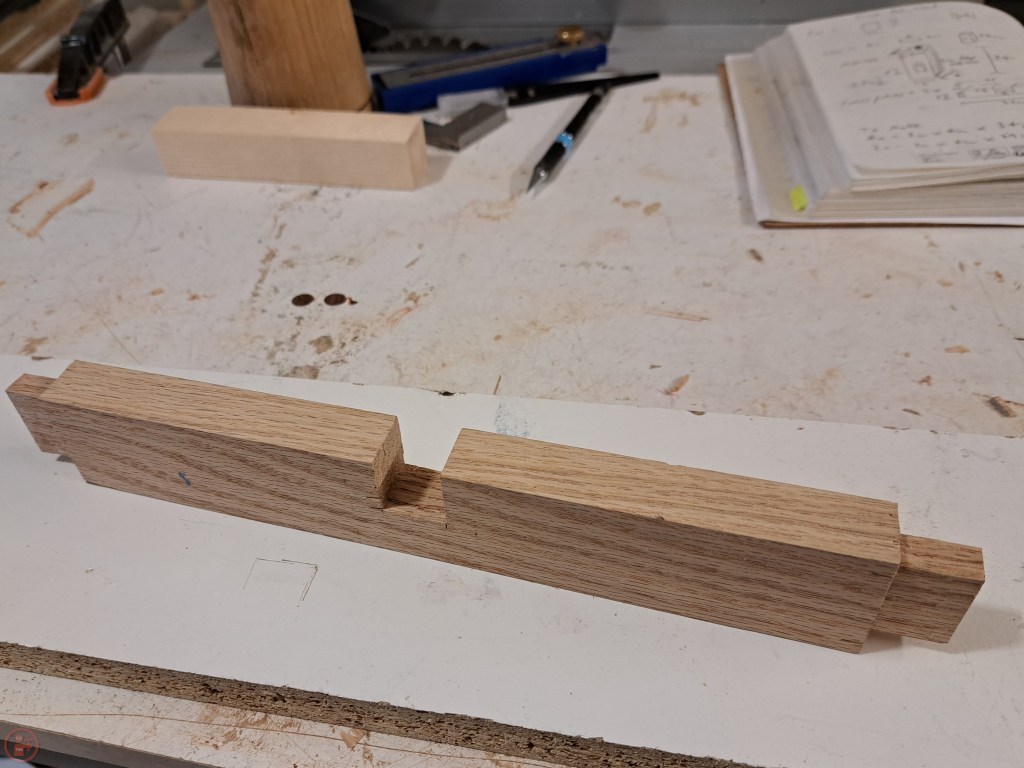
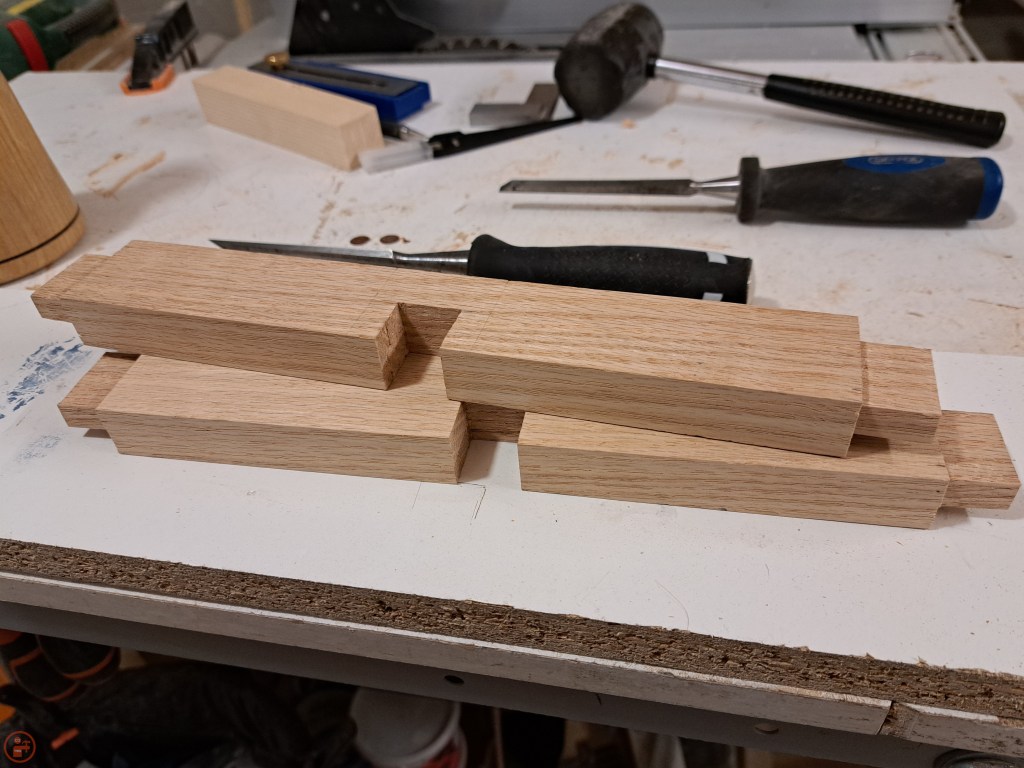
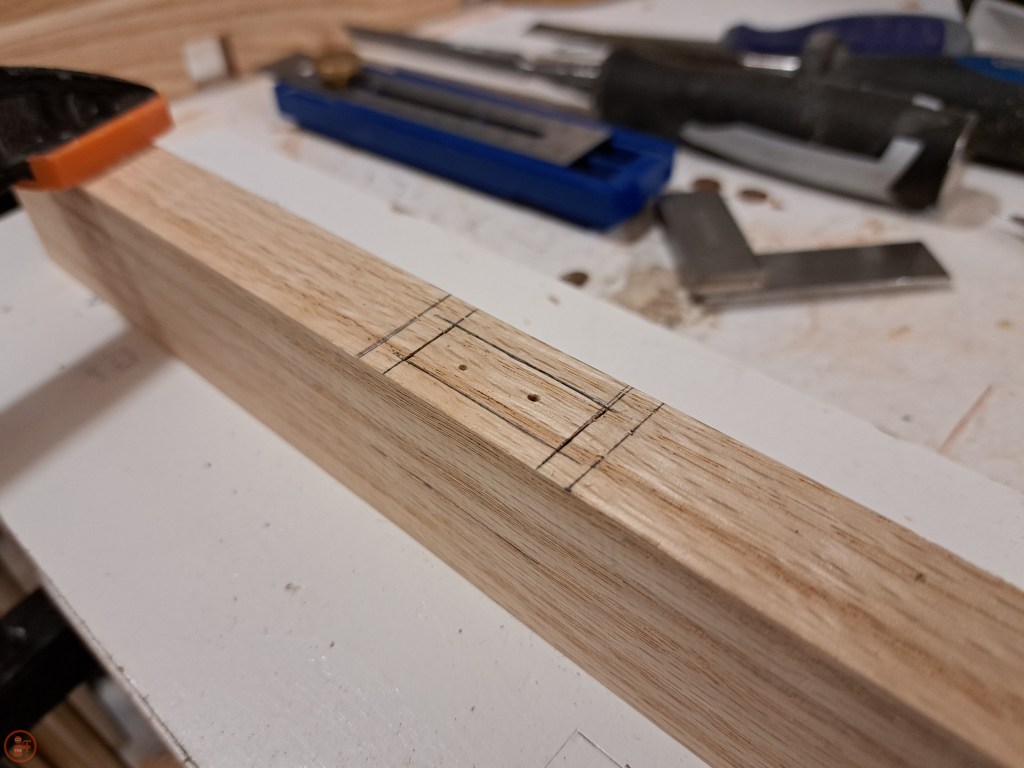
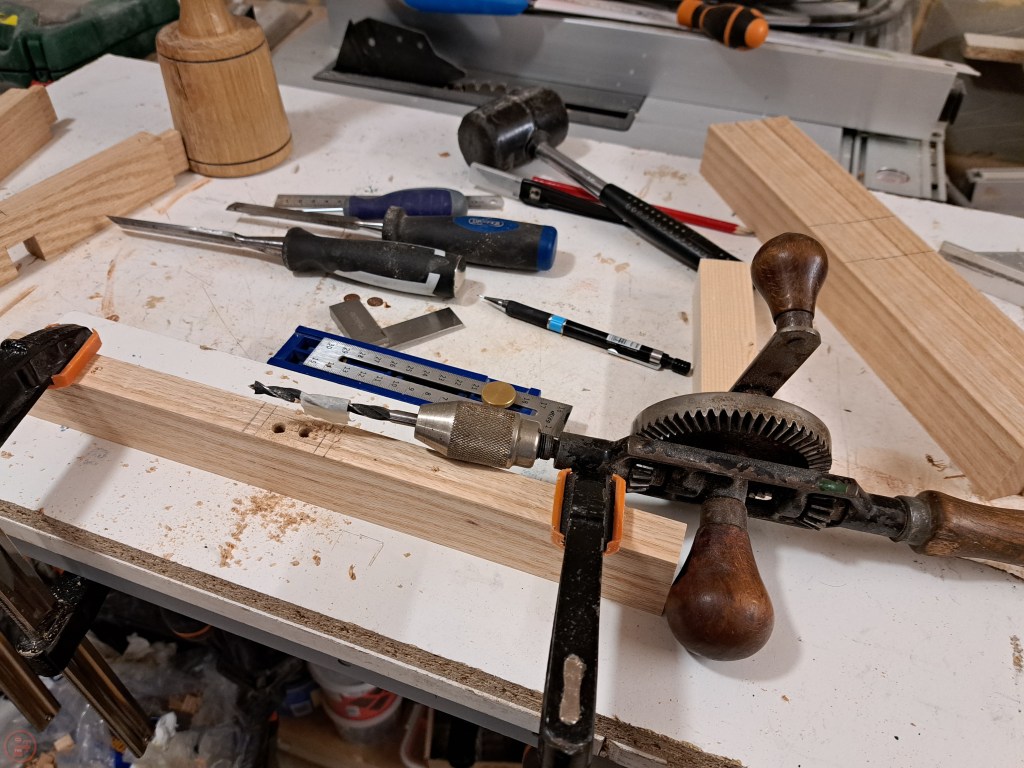
I then moved on to making the legs – these needed corresponding mortices, so I marked out the locations, ensuring the same height up from the ground on each leg. I made pilot holes and used a hand drill to remove some of the material from the mortice. I used my marking knife and chisels to refine the shape and then completed a dry test fit of the first joint. This worked very nicely and so I repeated the process for the second leg and then glued up both joints to make a letter “H” shape. I then did the whole thing again twice more, matching the other two legs to the remaining two tenons to ensure a snug fit.
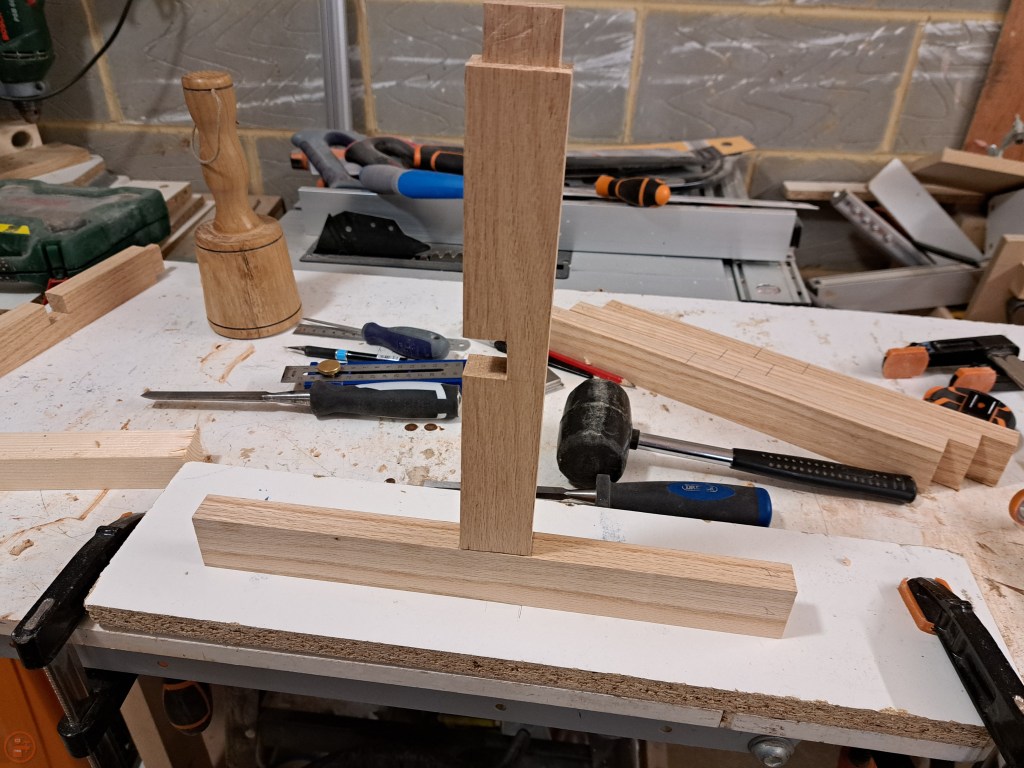
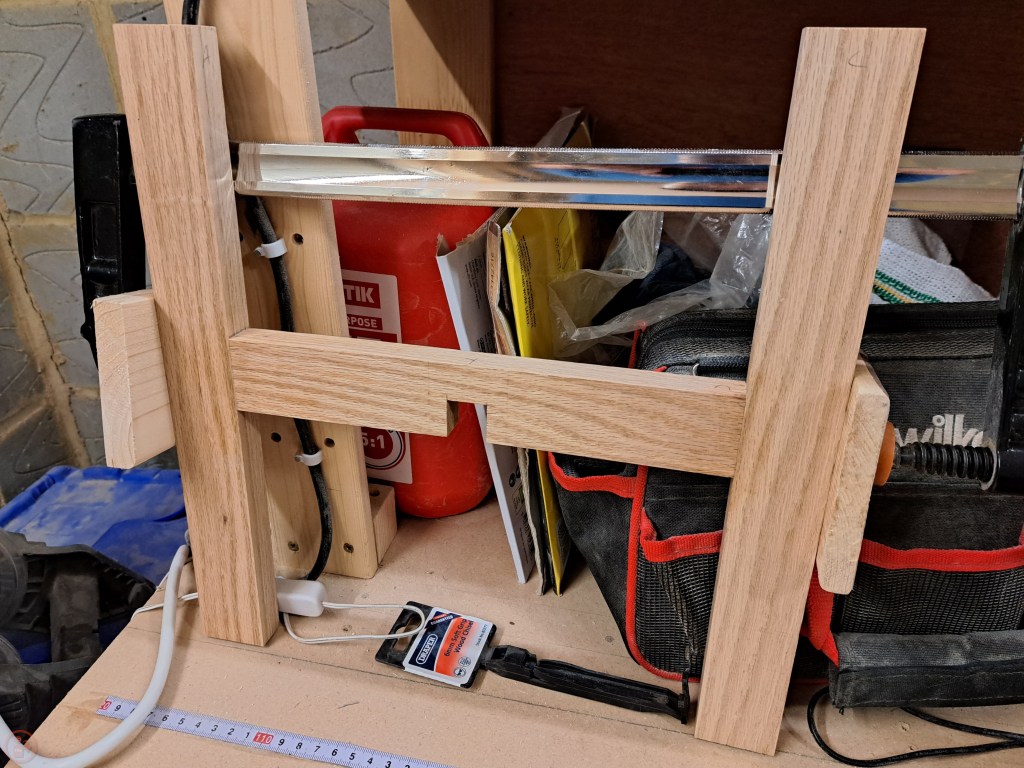
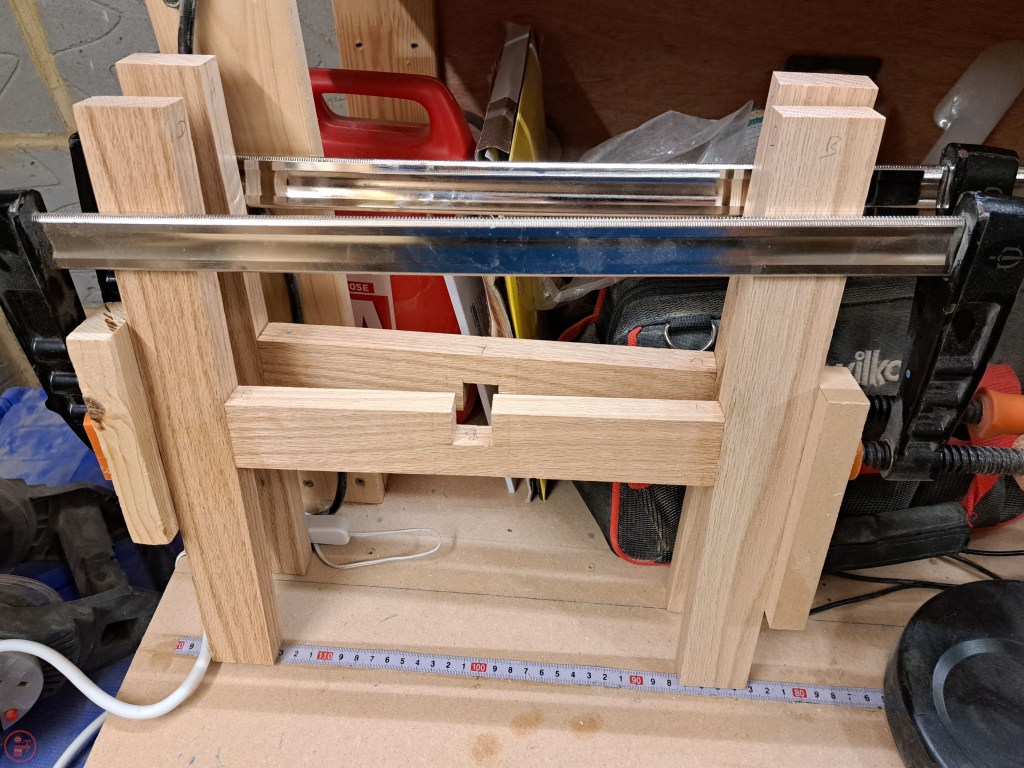
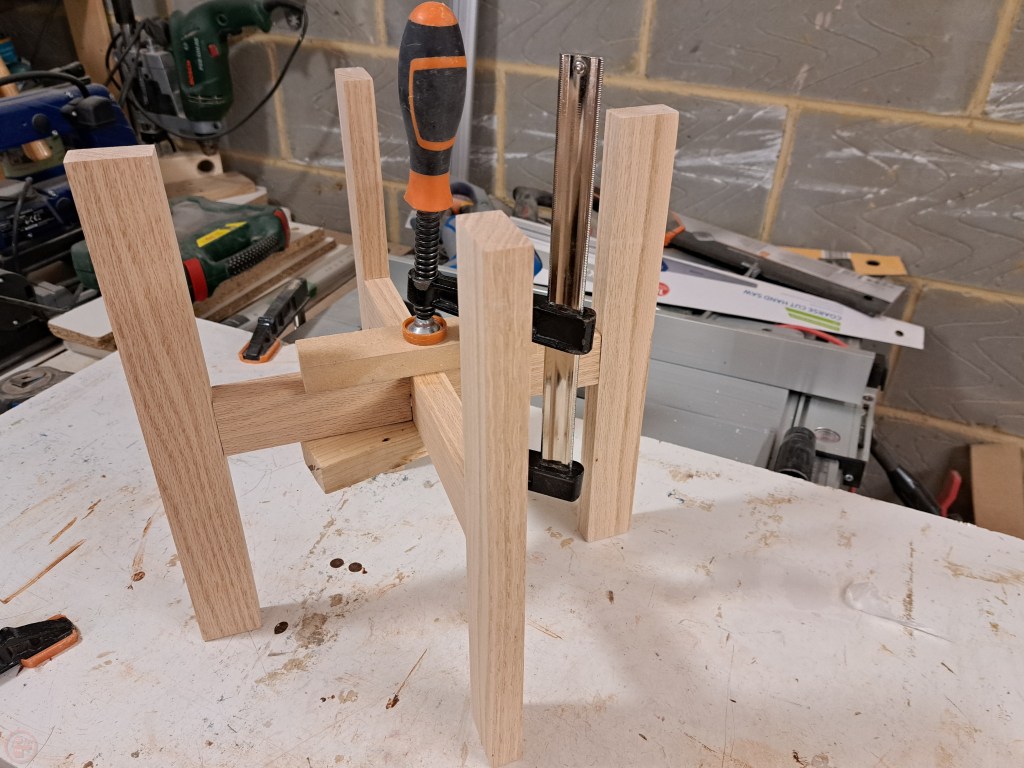
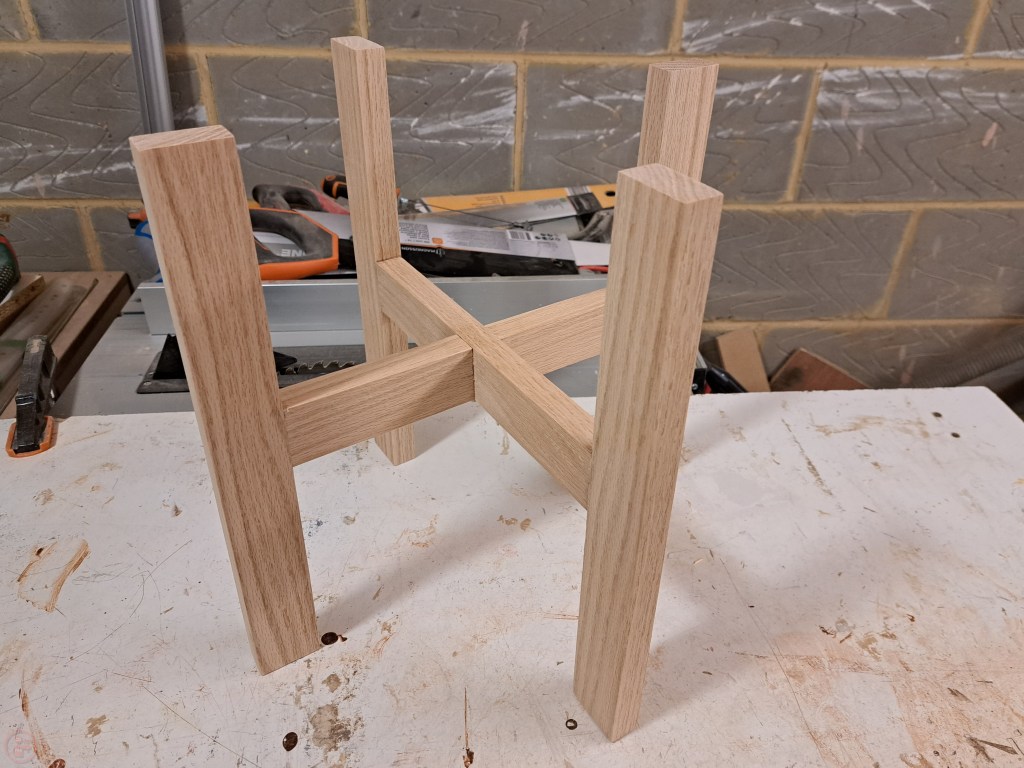
I glued up the second pair of legs with the centre piece, making sure the centre piece was in the opposite orientation, to ensure the two “H” shapes could slot together. Once the glue had fully dried on both parts, I did a quick test fit and then glued the centre pieces together to form the completed stand. I left this to dry overnight before a final hand sanding up to 120 grit.
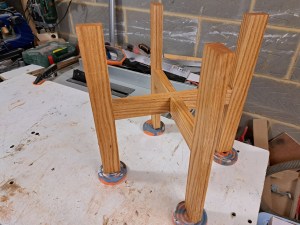
I applied Danish oil as a finish to bring out the grain – I really like how the grain makes tiger-like stripes on the legs! I’m really pleased with how the joints turned out too, as they are very snug and the centre pieces pleasingly sit flush to the legs on all joints.
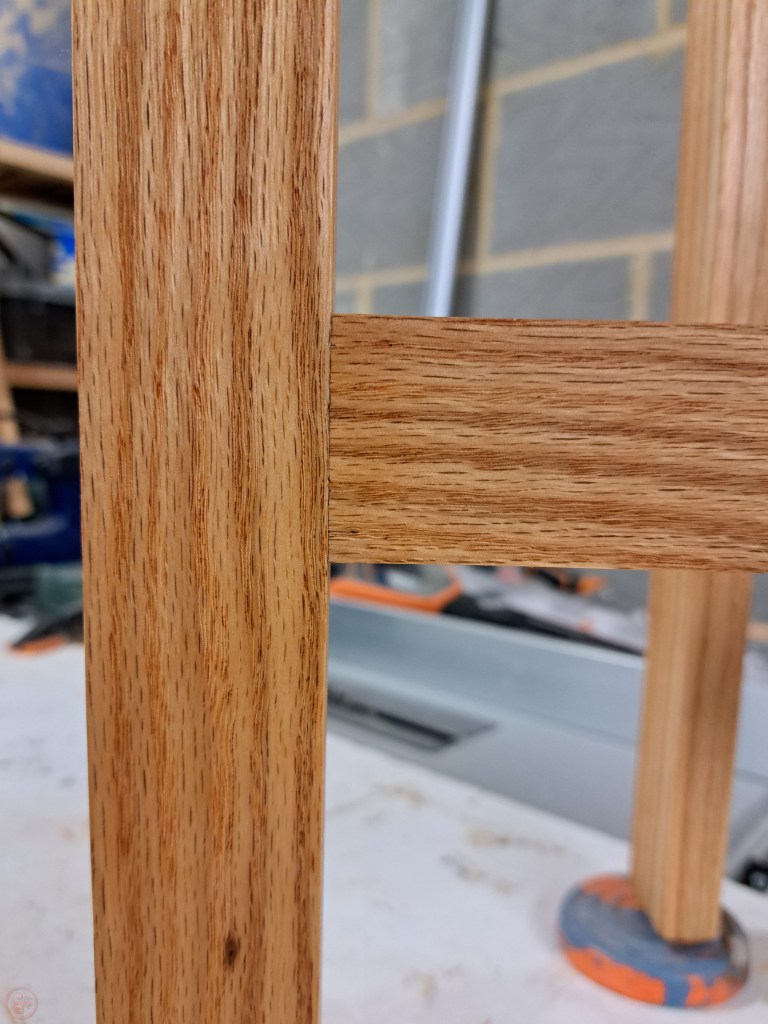
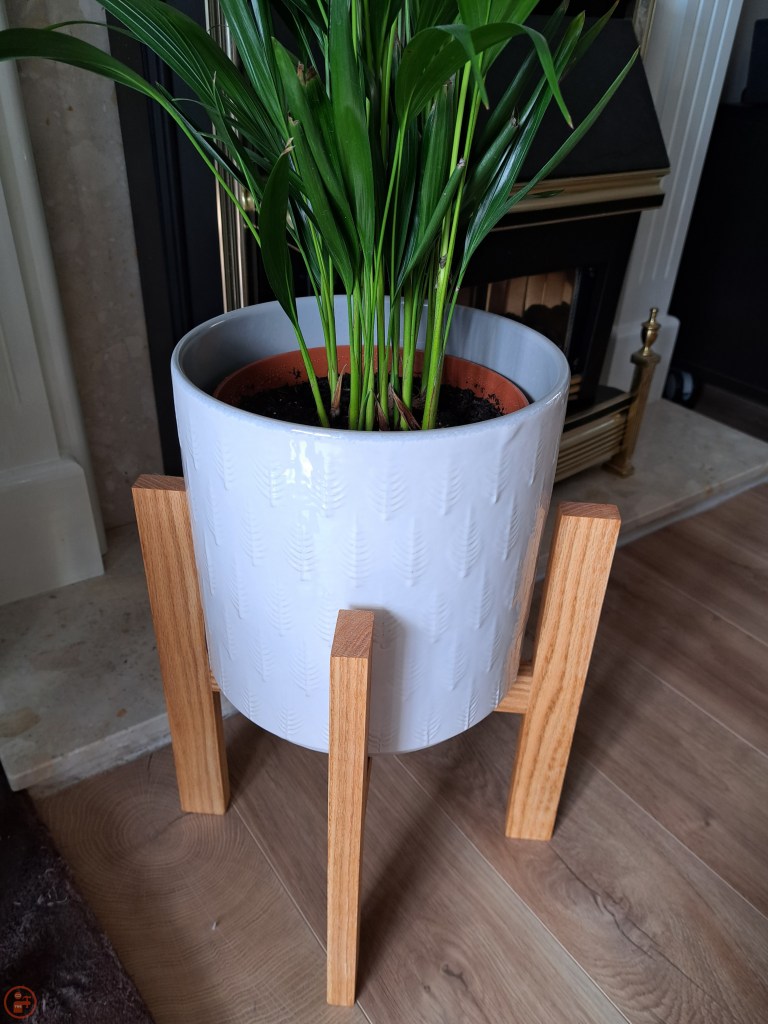
Once the Danish oil had fully soaked in, I wiped the stand all over to remove any excess oil, and then brought the stand into the house to meet the palm.
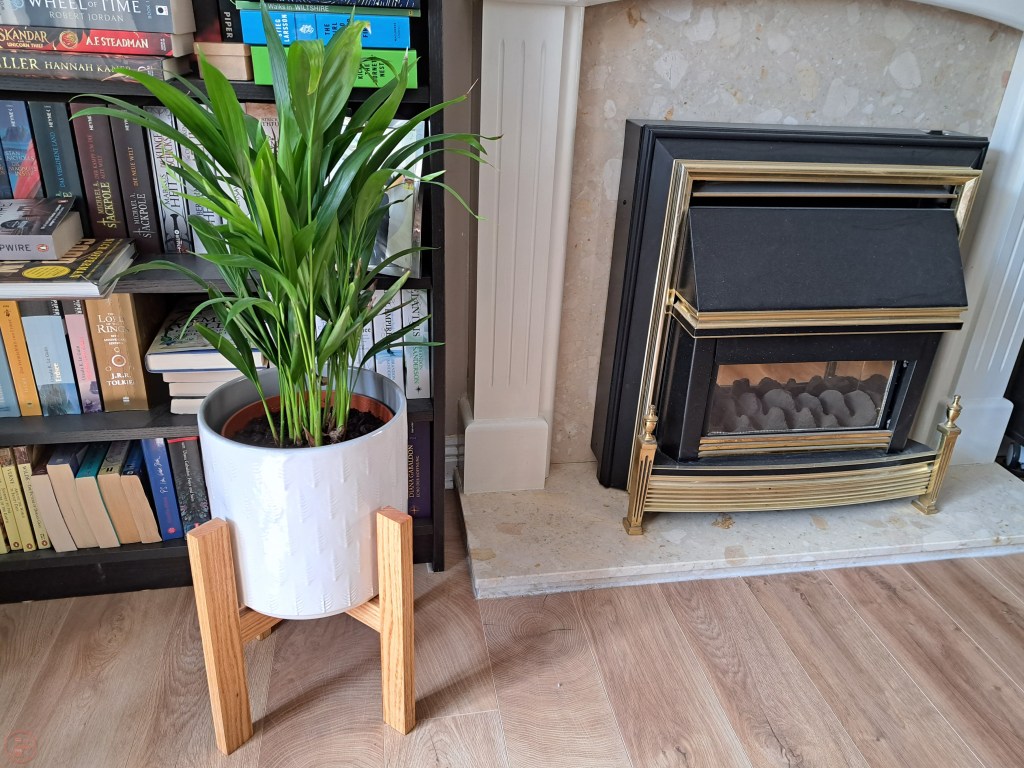
I’m really pleased with how this turned out – it was my first proper joinery project with hard wood really, and although it’s fairly simple a design, I think it works very nicely. The palm seems to be thriving in the bigger pot and is enjoying being slightly higher up to get more light from the window. Now, what do I make for the 10 other house plants? 🔨
 The Woodworking Scientist